Safe Amalgam Removal
Dental amalgams contain approximately 50% mercury. We remove them using the highest safety protocol to minimize exposure during the procedure.
Important: Scientific studies have documented that during amalgam removal without proper protocol, mercury vapor levels can significantly exceed occupational safety limits.[1]
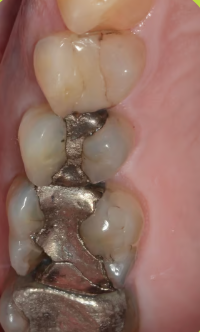
Why the concern about mercury?
Amalgams can release small amounts of mercury vapor, especially when chewing, drinking hot liquids, or brushing teeth. Various studies have investigated its possible accumulation in the body.[2,3]
Each amalgam filling contains approximately 50% metallic mercury, according to scientific literature.[2]
Elemental mercury is lipophilic and can cross the blood-brain barrier, according to toxicological studies.[3,4]
Research has found a positive correlation between the number of amalgams and mercury levels in brain tissue.[4]
SMART Protocol
Safe Mercury Amalgam Removal Technique. A protocol developed by the IAOMT designed to minimize mercury exposure during amalgam removal.
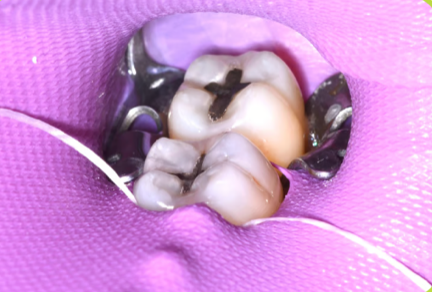
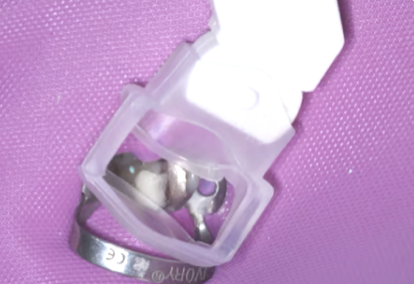
Complete isolation
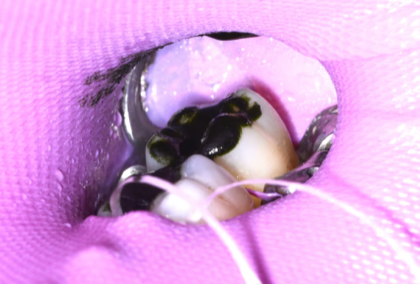
Latex-free nitrile rubber dam that completely seals the mouth, preventing amalgam particles or mercury vapor from contacting tissues.
Gold nasal mask
Special nasal mask with gold coating for the patient, providing a clean air source throughout the entire procedure.
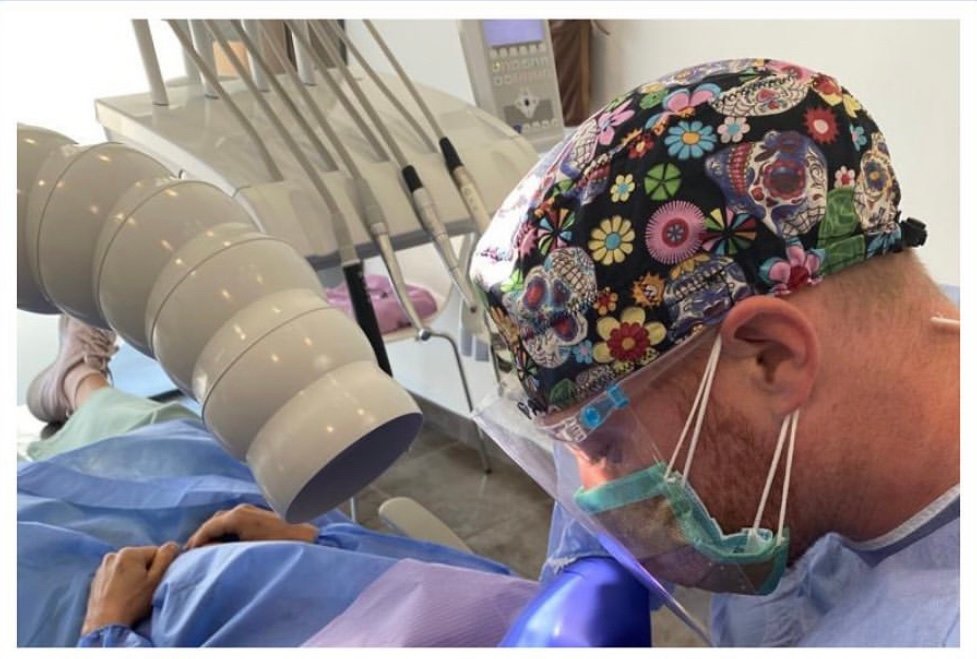
High-power suction
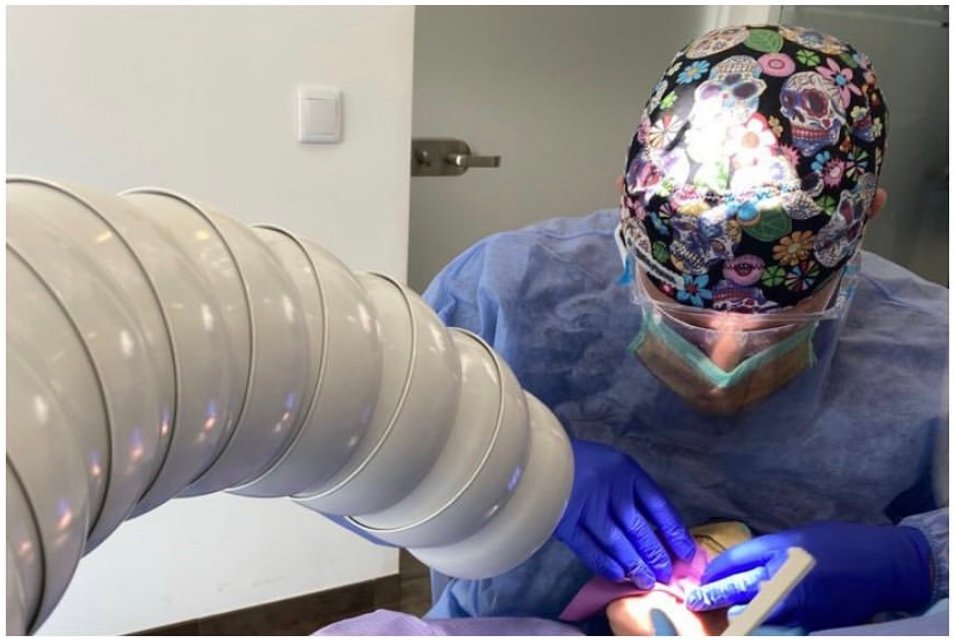
Specialized oral aerosol aspirator placed 2-4 cm from the mouth that captures mercury vapor at its source before it disperses.[1]
Abundant cold water irrigation
Continuous cold water spray that reduces temperature and minimizes mercury vaporization during drilling.
Extraction in large chunks
We section the amalgam into the largest possible fragments, minimizing drilling and reducing vapor release.[1]
Chelating chlorella
We apply chlorella directly to the cavity once the amalgam is removed. This algae is traditionally used as a support in detoxification protocols.
Team protection with gold
The dental team uses special gowns, caps, gold-coated masks, and nitrile gloves for maximum protection.
Environmental filtration
High-volume air filtration system in the room that removes mercury vapor and particles from the environment.
The process in images
Total transparency. This is how we work on every amalgam removal.


SMART Protocol Steps
 Full protection during the procedure
Your safety is our priority
Swiss oral aerosol aspirator
High-power system that captures mercury vapor directly at the source.
Gold nasal mask
Special mask with gold coating that provides clean air during the procedure.
Latex-free nitrile dam
Complete isolation that seals the work area from the rest of your mouth.
HEPA environmental filtration
Air purifiers that remove mercury particles from the room environment.
What can amalgam removal offer?
Some patients have reported improvements in various aspects of their wellbeing after removing amalgams from their mouth. Results vary from person to person.[5]
May influence vitality
Some patients report increased energy after removal. Each body responds differently and individual results may vary.
May help mental clarity
Patients have reported subjective improvements in concentration and memory. These are individual testimonials and do not guarantee similar results.[5]
Reduces an exposure source
By removing amalgams, you eliminate a continuous source of mercury exposure. Your body stops receiving this exposure every time you eat or brush.
May support digestive wellness
Some patients notice digestive improvements. The exact relationship with amalgam removal remains a subject of scientific research.
Natural aesthetics
We replace dark amalgams with tooth-colored composite restorations, restoring the natural beauty of your smile.
Long-term peace of mind
For many patients, the decision to remove amalgams provides personal peace of mind, regardless of other effects.
Frequently Asked Questions
Without proper protocol, removal can generate exposure to mercury vapor. Studies have documented elevated levels during drilling without protection.[1] That’s why it’s essential that removal is performed with the complete SMART protocol. With proper protective measures, the procedure significantly minimizes risks.
At BDS, our goal is to remove all amalgams in a single session whenever possible. However, each case is studied individually, taking into account your general health status and the specific characteristics of your restorations to determine the best approach.
We use biocompatible tooth-colored composite restorations. For larger cavities, we may opt for ceramic inlays. We always choose metal-free materials tested for biocompatibility.
We offer information about support protocols before, during, and after removal that may include supplementation with natural chelators, antioxidants, and liver support. Our integrative medicine team can guide you based on your particular case.
The cost depends on the number of amalgams, their size, and the type of restoration chosen. The SMART protocol requires specialized equipment and more time, making it more expensive than conventional removal. We’ll provide a detailed quote after the initial consultation.
Other treatments
Zirconia Implants
Biocompatible
Learn moreFDOJ Cavitations
Hidden inflammation
Learn moreDental Ozone Therapy
Natural disinfection
Learn moreRegenerative PRF
Your own blood
Learn moreCBCT Cone Beam
3D Diagnosis
Learn moreIntegrative Orthodontics
Dr. Patricia Díaz
Learn moreBiological Pediatric Dentistry
Dr. Brenda Martínez
Learn moreIntegrative Medicine
Dr. Patrick Welter
Learn moreConsider removing your amalgams
Request a consultation to assess the condition of your amalgams and evaluate whether SMART protocol removal is right for you.
Scientific References
[1] Warwick D, Young M, Palmer J, Ermel RW. (2019). Mercury vapor volatilization from particulate generated from dental amalgam removal with a high-speed dental drill – a significant source of occupational exposure. Journal of Occupational Medicine and Toxicology, 14:22.
[2] Mutter J. (2011). Is dental amalgam safe for humans? The opinion of the scientific committee of the European Commission. Journal of Occupational Medicine and Toxicology, 6:2.
[3] Mutter J, Curber A, Naumann J, Walach H, Daschner F. (2010). Does Inorganic Mercury Play a Role in Alzheimer’s Disease? A Systematic Review and an Integrated Molecular Mechanism. Journal of Alzheimer’s Disease, 22(2):357-374.
[4] Eggleston DW, Nylander M. (1987). Correlation of dental amalgam with mercury in brain tissue. Journal of Prosthetic Dentistry, 58(6):704-707.
[5] Kidd RF. (2000). Results of dental amalgam removal and mercury detoxification using DMPS and neural therapy. Alternative Therapies in Health and Medicine, 6(4):49-55.